Rooms, Routes, Rituals: Three Signals Reshaping Cultural Space
IN GOOD FORM / 005
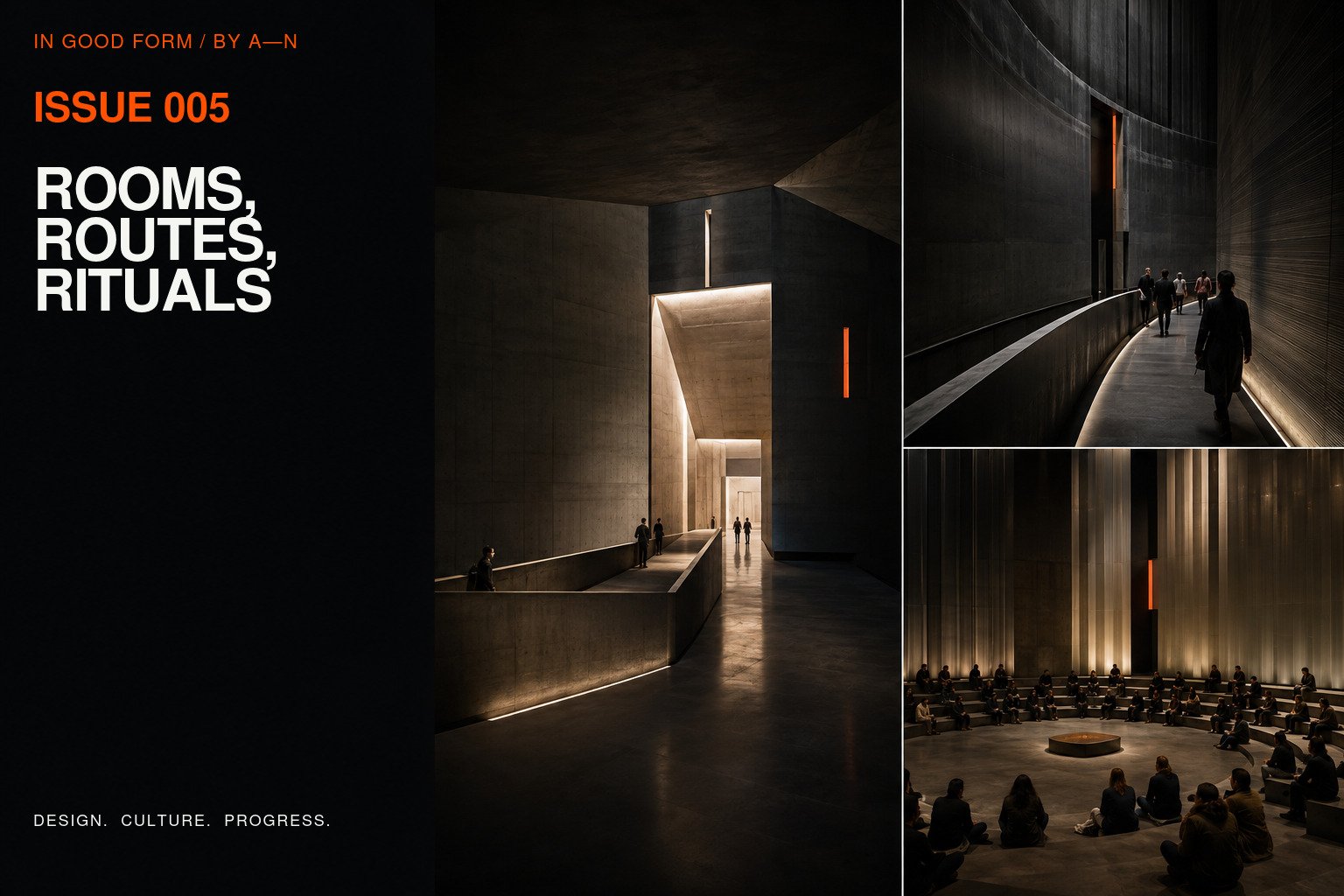
Three things we are watching across design, culture and experience — and the connective tissue between them.
The most relevant spaces are no longer singular destinations. They are becoming networks: a sequence of rooms, an archive distributed through a landscape, or a cultural itinerary activated across an entire city.
Lead artwork: A—N.
01 / NEW OPENING — HERMÈS LONDON MAISON
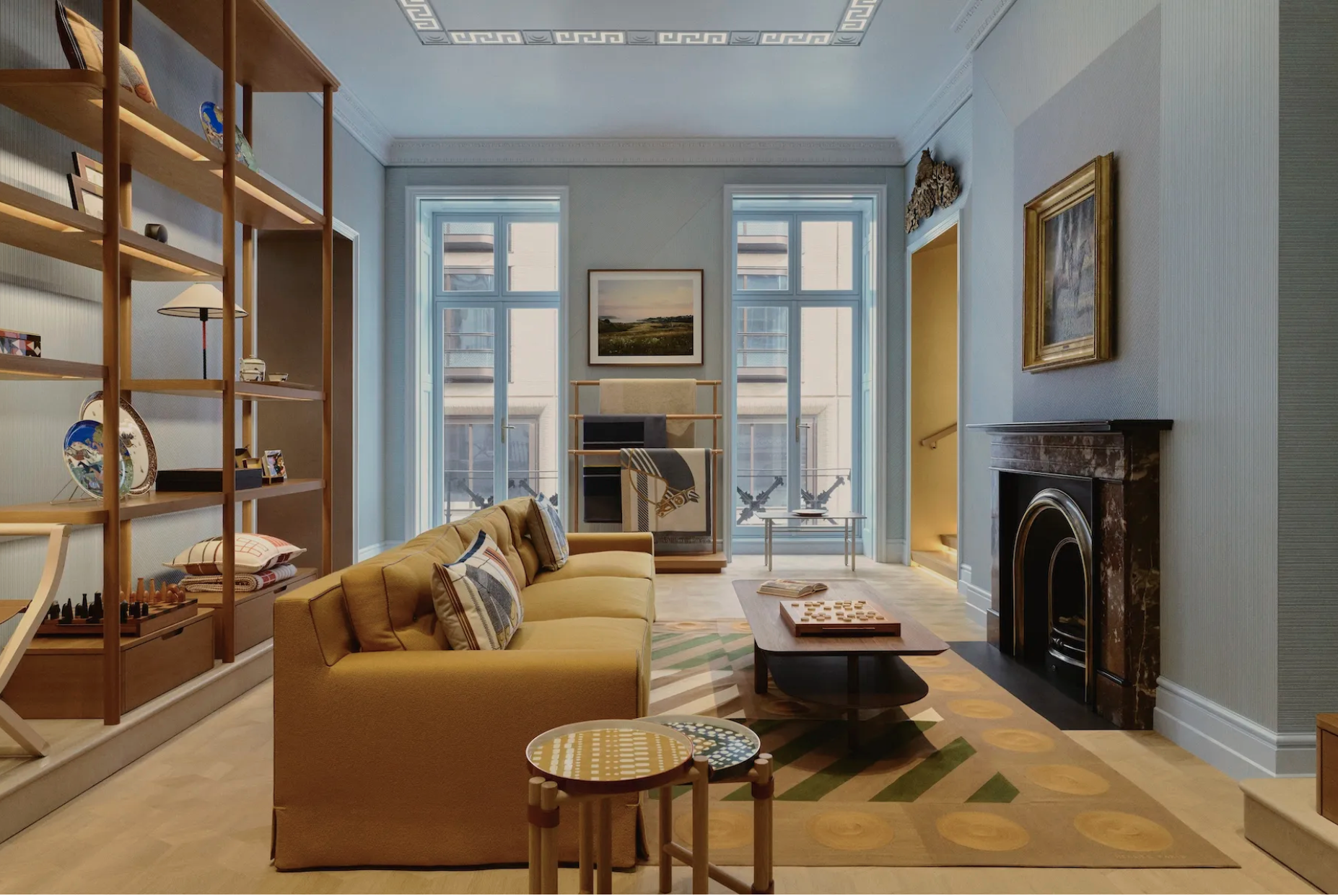
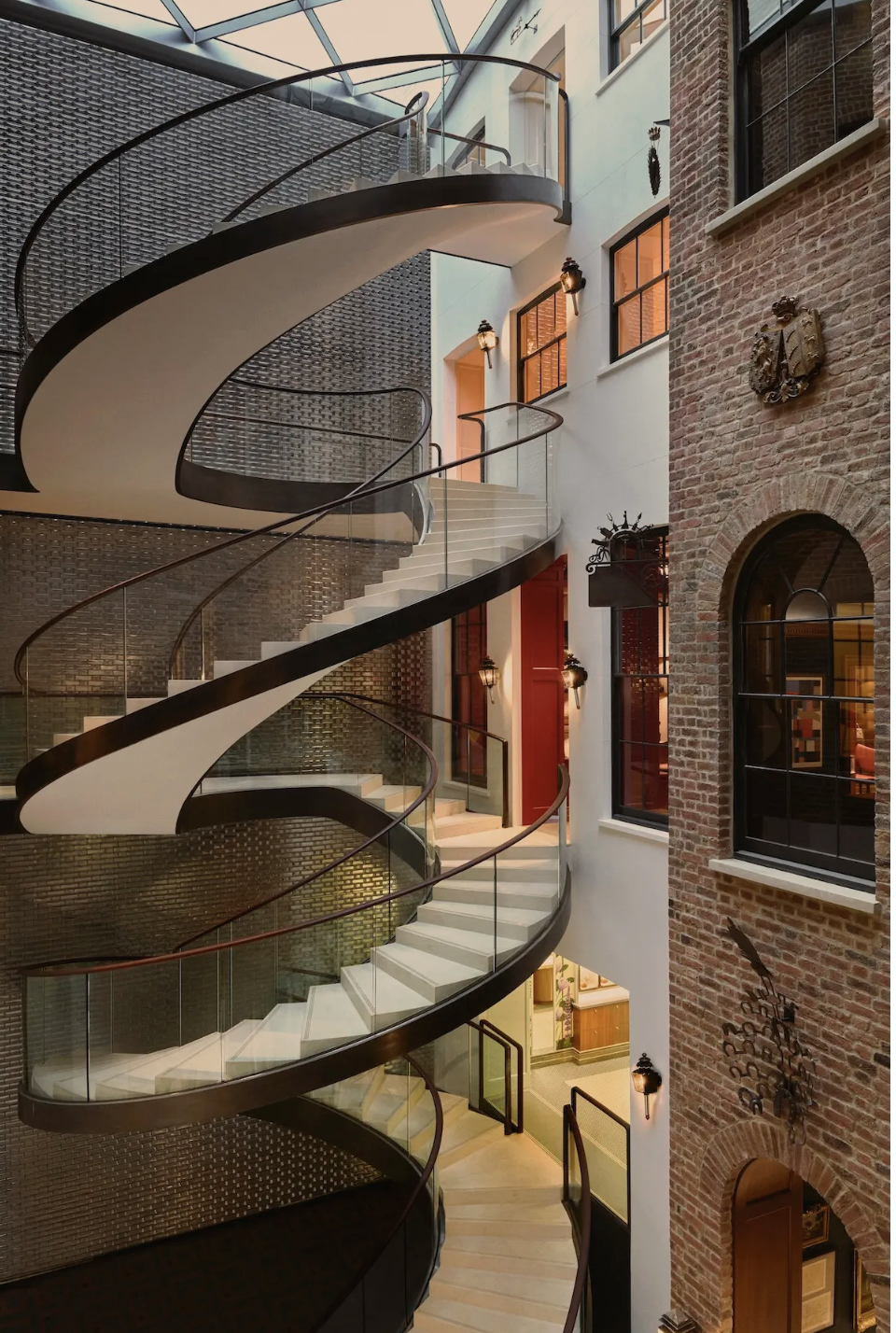
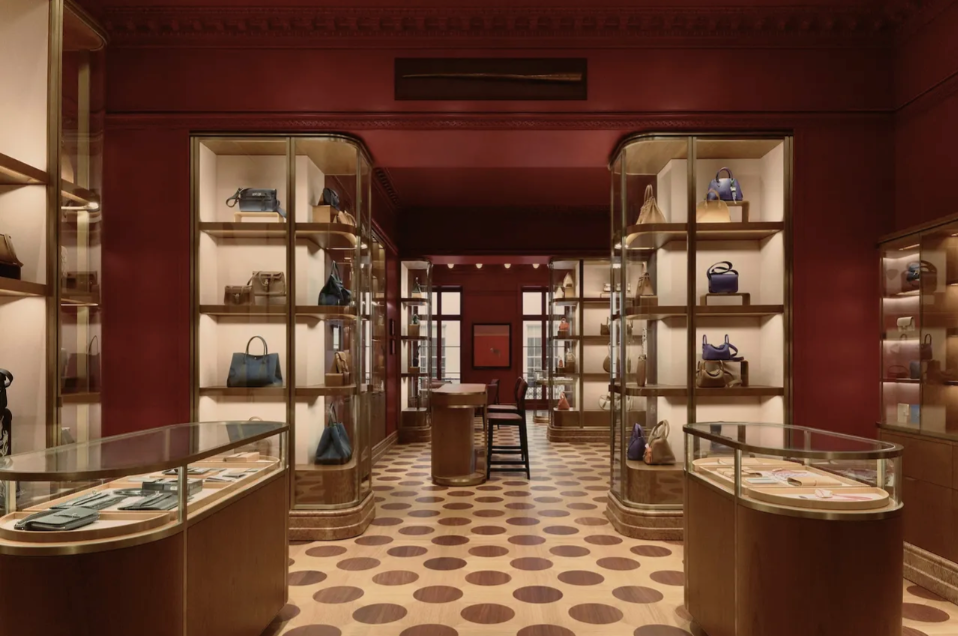
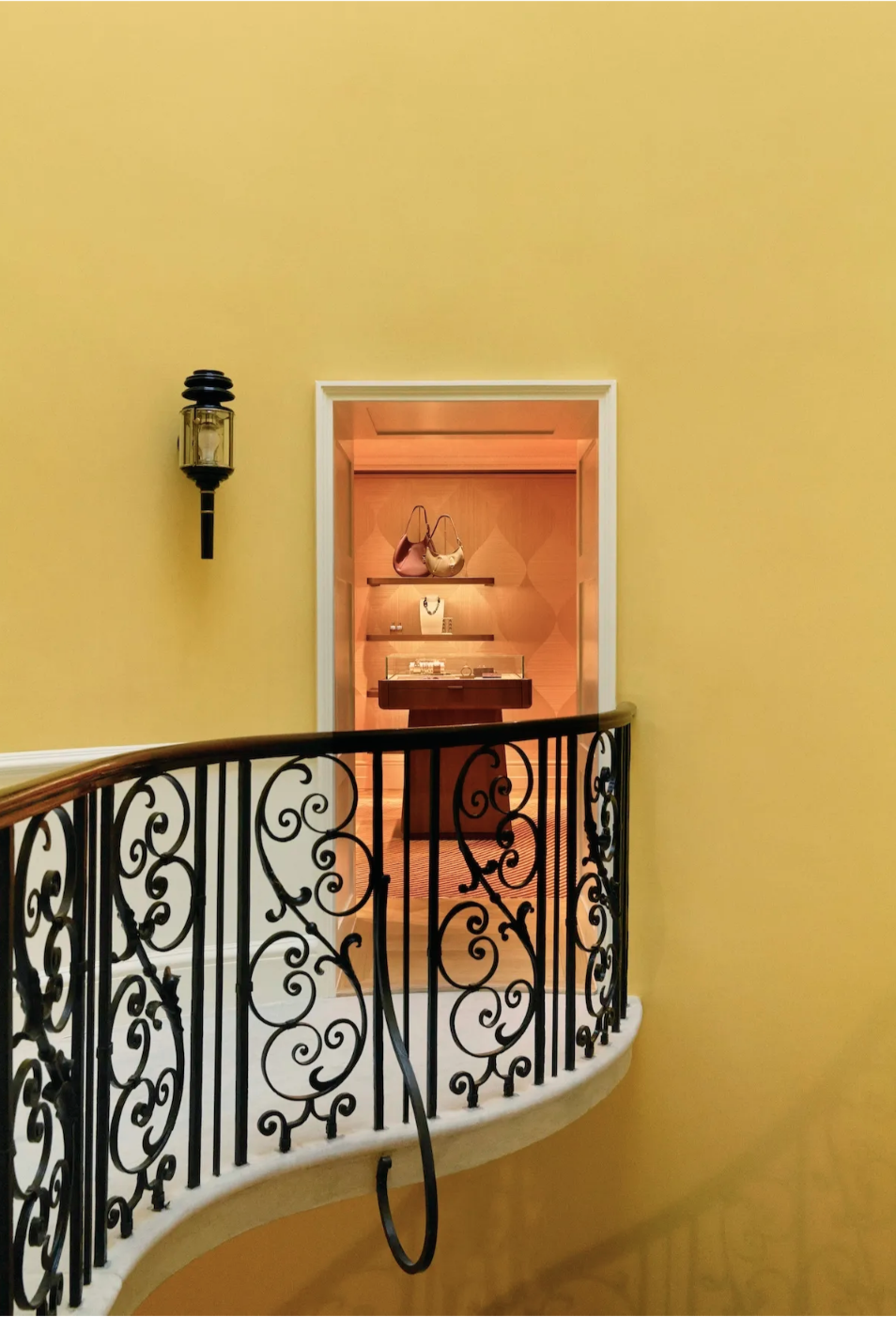
Hermès has opened one of its most ambitious physical expressions at 166 New Bond Street. The new London Maison brings together six Grade II-listed buildings across 2,000 square metres, five floors and 55 individually composed rooms. RDAI, under the artistic direction of Denis Montel, treated the inherited irregularity as a design asset: different levels, periods and proportions become a series of distinct atmospheres rather than one flattened retail language.
More than 500 artworks selected for the address sit alongside patinated copper, straw and horsehair marquetry, bespoke British wallcoverings, reclaimed oak and an extended leather-clad stair. The result is less flagship than urban interior — a house of craft where discovery happens by moving slowly from room to room.
The signal: scale is no longer expressed through one monumental gesture. Luxury is becoming sequential, specific and almost residential. The store earns attention by rewarding navigation.
Project: Hermès London Maison. Architecture and interiors: RDAI, artistic direction Denis Montel. Photography referenced by Wallpaper*: Valerie Sadoun. Source: Wallpaper* (https://www.wallpaper.com/fashion-beauty/hermes-maison-bond-steet-london-store-denis-montel).
02 / CULTURE — PHOTODALKEITH RSA200
Opening 22 August at Dalkeith Palace, PhotoDalkeith RSA200 traces two centuries of Scottish photography through historic collections, contemporary Academicians and newly commissioned work. The exhibition extends beyond the palace into Dalkeith Country Park, shifting the archive from a sealed institutional container into an encounter between image, architecture and landscape.
That move matters. Culture is increasingly experienced through context rather than simply displayed against a white wall. A photograph changes when the route to it includes a historic room, a view into the grounds or an outdoor installation. The exhibition becomes a spatial edit of time.
The signal: archives are becoming active material. The most compelling cultural spaces do not merely preserve history; they choreograph new relationships between history, place and the present.
Exhibition: PhotoDalkeith RSA200, 22 August–27 September 2026. Presented with the Royal Scottish Academy at Dalkeith Palace. Sources: Royal Scottish Academy (https://www.royalscottishacademy.org/partners/112/) and Dalkeith Country Park (https://www.dalkeithcountrypark.co.uk/event/photodalkeith/).
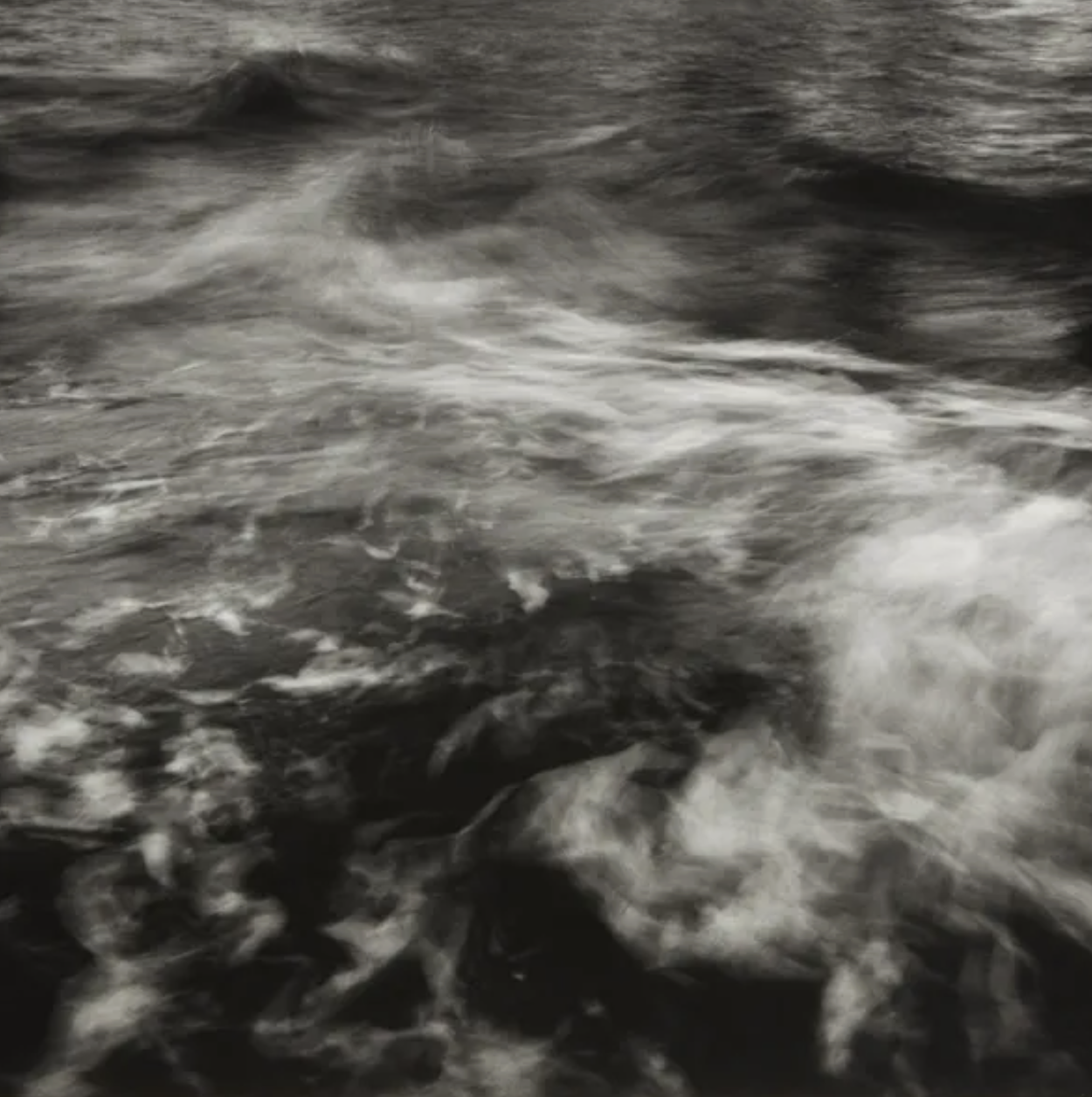
PhotoDalkeith 2026: RSA200 celebrates Scotland’s rich photographic heritage and the development of photography as an art form.
03 / EXPERIENCE — A VERY LAUFEY DAY
On 23 August, A Very Laufey Day returns across more than 75 cities in over 25 countries. The fourth edition expands a fan day into a distributed celebration of music, museums, performance, books and public culture. Itineraries connect libraries, independent bookstores, cafés, galleries, orchestras and candlelit concerts; the event also extends collaborative library-card programmes into more than 50 locations.
This is fandom behaving like civic infrastructure. Laufey is not asking an audience to enter one branded pop-up. She is giving them a reason to move through existing cultural places, meet one another and see those institutions with fresh eyes. The city becomes the venue; participation becomes the medium.
The signal: the next experiential platform may be a route rather than a room. Brands and artists can create belonging without owning every square metre of the experience.
Experience: A Very Laufey Day, 23 August 2026. Cover imagery for the event is credited by uDiscover Music as courtesy of Mercury Records. Sources: official event site (https://averylaufeyday.com/) and Associated Press (https://apnews.com/article/ccbbc3c99a17f7a648f8b14f202707f4).
THE A—N READ
Rooms create intimacy. Routes create discovery. Rituals create return.
Together, these signals point to a future in which space is judged less by how much it contains and more by how intelligently it connects people, culture and time. The strongest environments are becoming cultural operating networks — designed to be entered, navigated and repeated.
What could your space connect?