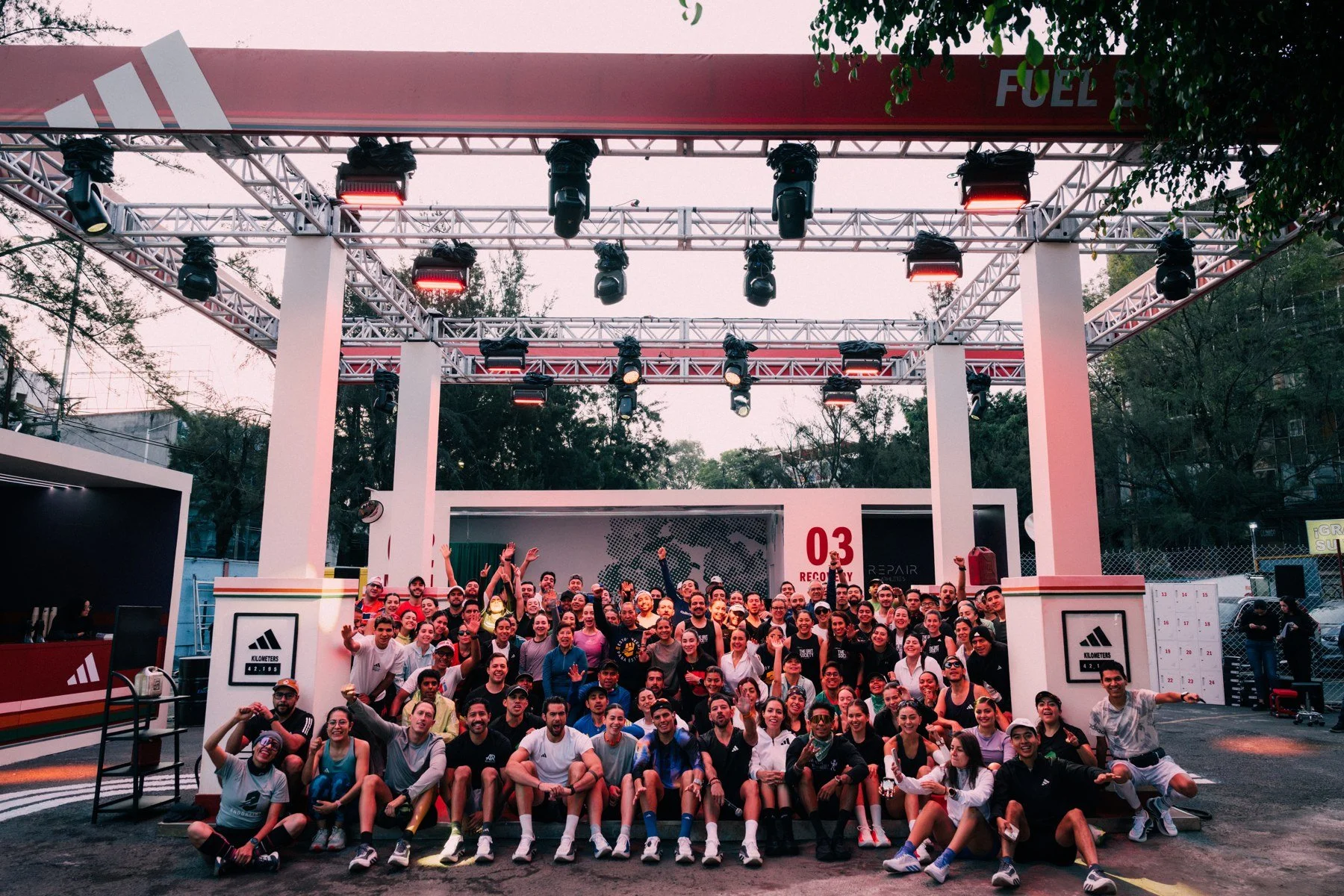
Image: adidas México, via Running Life.
IN GOOD FORM / A—N PERSPECTIVE
The headline moment is rarely the whole experience. Before an event, people prepare and find each other. Afterwards, they need somewhere to pause, talk and make sense of what has just happened.
Those surrounding moments offer a rich brief for spatial design. They ask a brand to be useful at a particular time, in a particular place. The result can be a temporary interior with a clear role in the city, rather than an isolated launch environment.
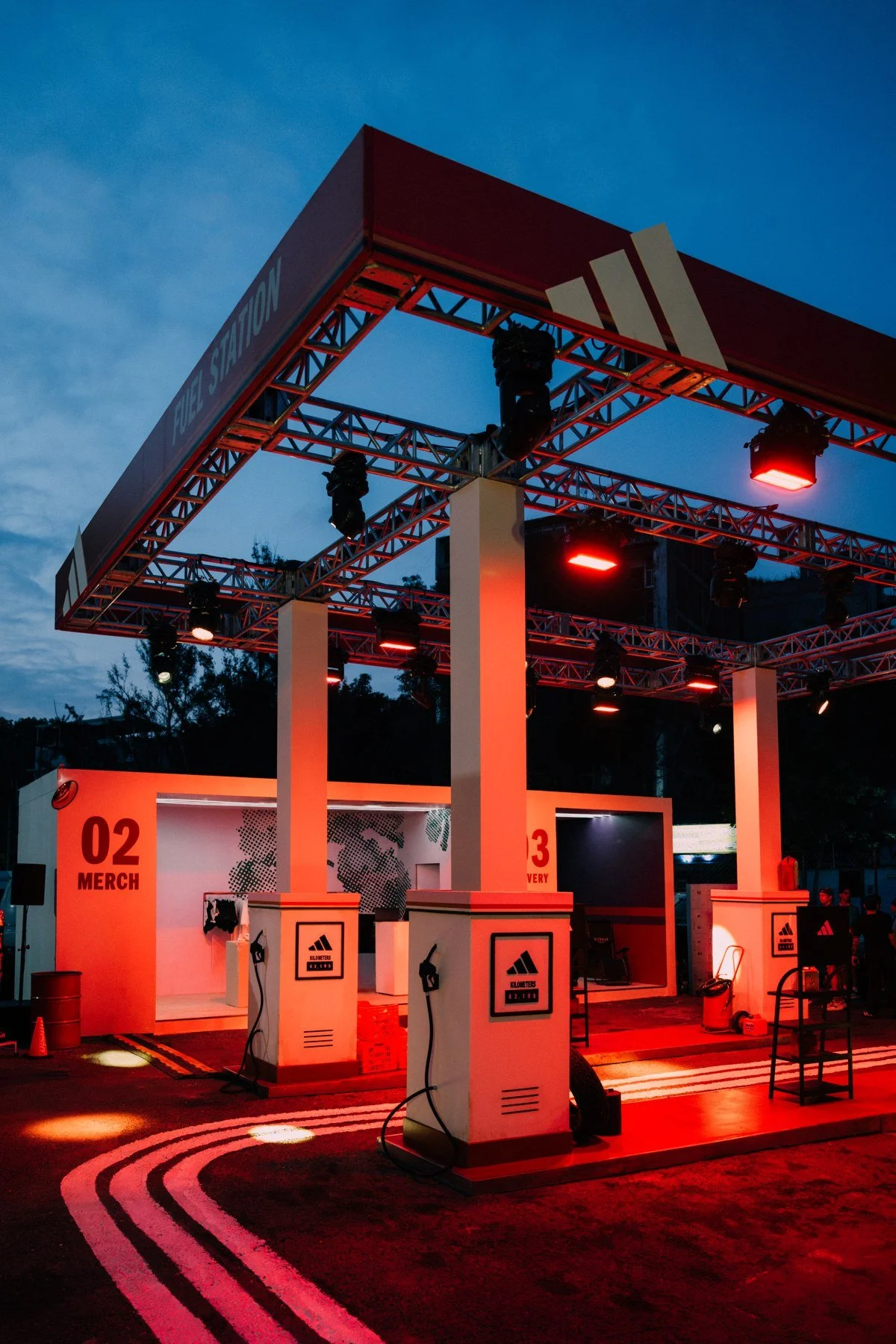
Image: adidas México, via Running Life.
Start with the sequence
Around the August 2026 Mexico City Marathon, adidas created Fuel Station in Roma Norte. Reporting on the event describes a three-day programme supporting runners, friends and spectators through hydration, preparation and recovery. The station also served as a meeting point for running and cheering activities.
The name made the offer easy to understand: a place to replenish before continuing. Its relationship to the marathon route gave that offer a precise context.
My interest is the sequence around it. A runner arriving before an event has different needs from a friend waiting beside the route or someone returning afterwards. Designing for those differences can give a small temporary footprint several useful modes.

Image: adidas México, via Running Life.
Give each activity enough space
For an event base, I would map the arrival and waiting moments first. Where do people meet? How do they identify the next activity? What happens when a group arrives together?
A clear service sequence might move from information to preparation, then towards an activity or a place to rest. Each stage needs space for belongings and companions. Someone should be able to stay without blocking the person who only needs a quick answer.
That is where the plan earns its value. A well-placed counter, a visible meeting point and seating with a view of the activity can make the experience legible without covering every surface in instructions. Product can have a place within that sequence, connected to what people are there to do.
Treat the street as part of the brief
An event changes the behaviour of a neighbourhood. People arrive at unusual times, walk different routes and gather in groups. A temporary retail space should respond to those patterns.
I would look beyond the tenancy line when developing the concept. The approach, threshold and view from the street need to tell someone whether they have found the right place. The interior needs to accommodate the conditions they bring with them: bags, wet clothing, noise, fatigue or the company of several friends.
That does not require a city-wide build. One useful base, linked clearly to a route or local partner, can establish a relationship that feels grounded in the place.
Let the programme shape the materials
Temporary does not have to mean visually slight. Repeated forms, a controlled colour palette and a convincing material detail can give an installation a complete identity.
The programme should determine what needs durability, what needs comfort and what can be reused. A surface that photographs beautifully but struggles through a busy service period will undermine the experience. The handover needs to include reset and pack-down as well as the opening moment.
Design for the memory afterwards
The lasting image may be a conversation, a shared wait or the relief of finding somewhere to sit. Those moments can carry a brand with remarkable clarity because they connect to a real need.
For me, that is the opportunity around an event: make the supporting space as considered as the headline attraction. Give people a useful reason to arrive, a comfortable reason to stay and a clear way to continue.
Curated and written by Alexa Nice | Studio A-N
DESIGN. CULTURE. PROGRESS.
Sources
Running Life — adidas pre-marathon programme